Aluminium boat maintenance: preparing for the season and winter
An aluminium boat needs almost no maintenance – but “almost” means a few jobs in spring and autumn. Here they all are.
The most common question when we sell an aluminium boat is “do I really not need to do anything?”. Almost. Marine 5052-H34 alloy does not rust, rot or fade, but a few habits in spring and autumn keep the boat like new for 20 years.
After every trip
Rinse the hull with fresh water – especially after the lagoon or the coast where salt collects in the seams. Pull the bung and tilt the boat so water drains from under the floor. Let carpet dry in the open.
Galvanic corrosion – aluminium's only real enemy
Aluminium does not rust, but in contact with copper, steel or brass in salt water it becomes the anode and erodes. Rules: A4 stainless fasteners with insulating washers only; no copper wires lying on the bottom; a zinc or aluminium anode on the transom and motor, replaced when half gone. We fit anodes and insulated fasteners as standard.
Spring
- Inspect seams and keel for scratches to bare metal.
- Check flotation compartment bungs and seals.
- Charge the battery: a LiFePO4 stored at 50–60 % over winter is fully charged with the waterproof charger and cell balance checked in the app.
- Petrol motor – gear oil, plug, fresh fuel; electric – just check the connectors.
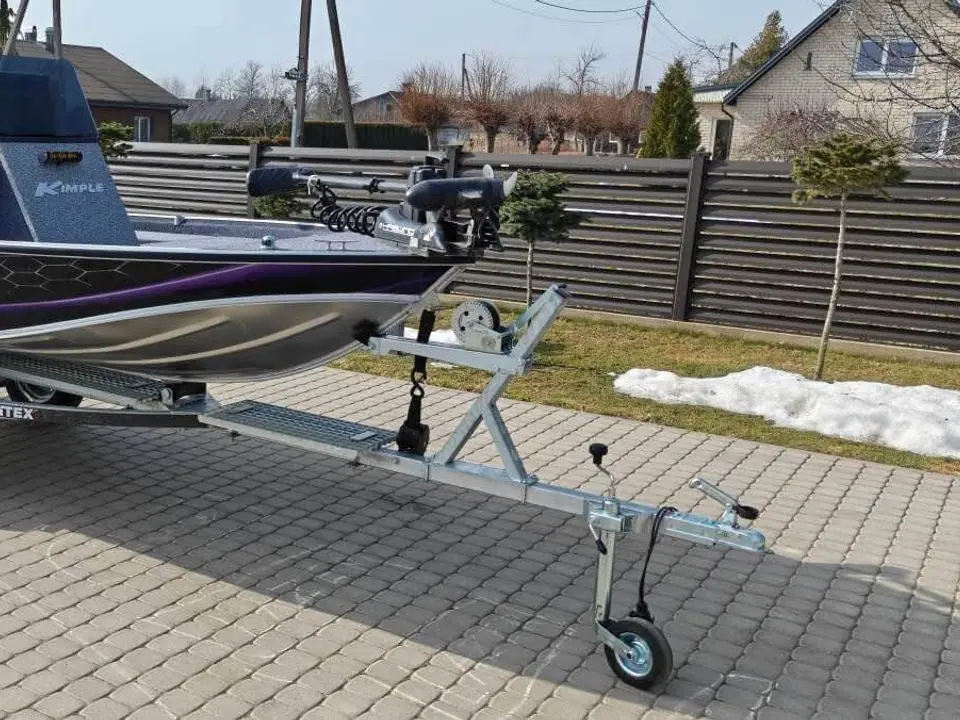
- Check trailer rollers, bearings and lights; grease the coupling lock.
Autumn: winter storage
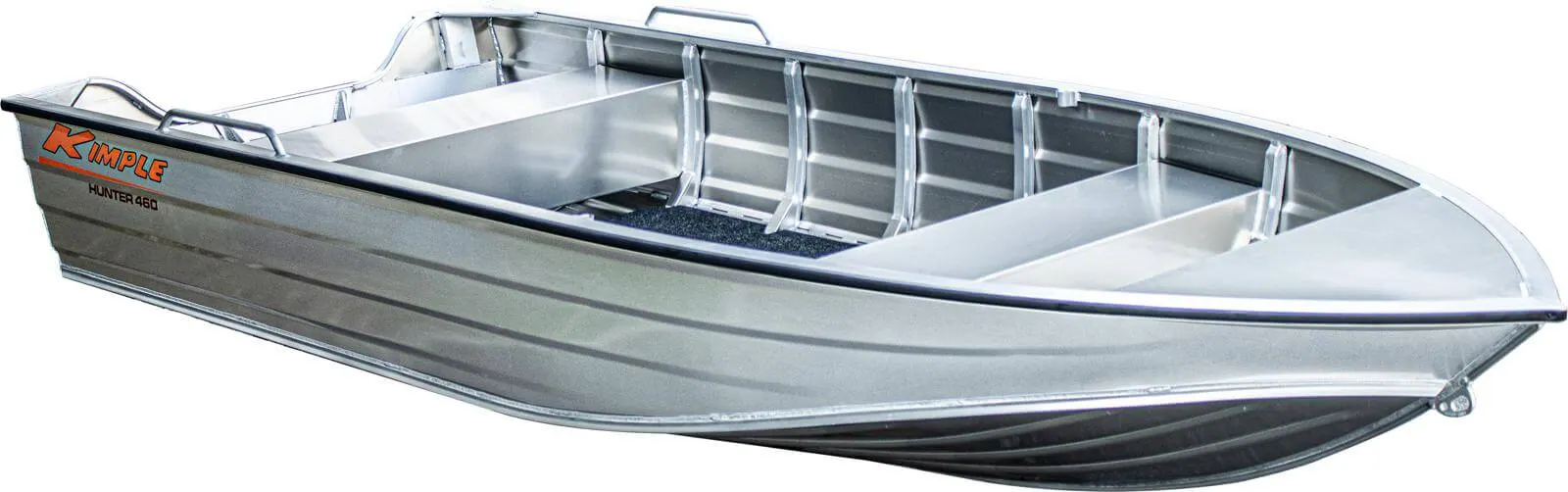
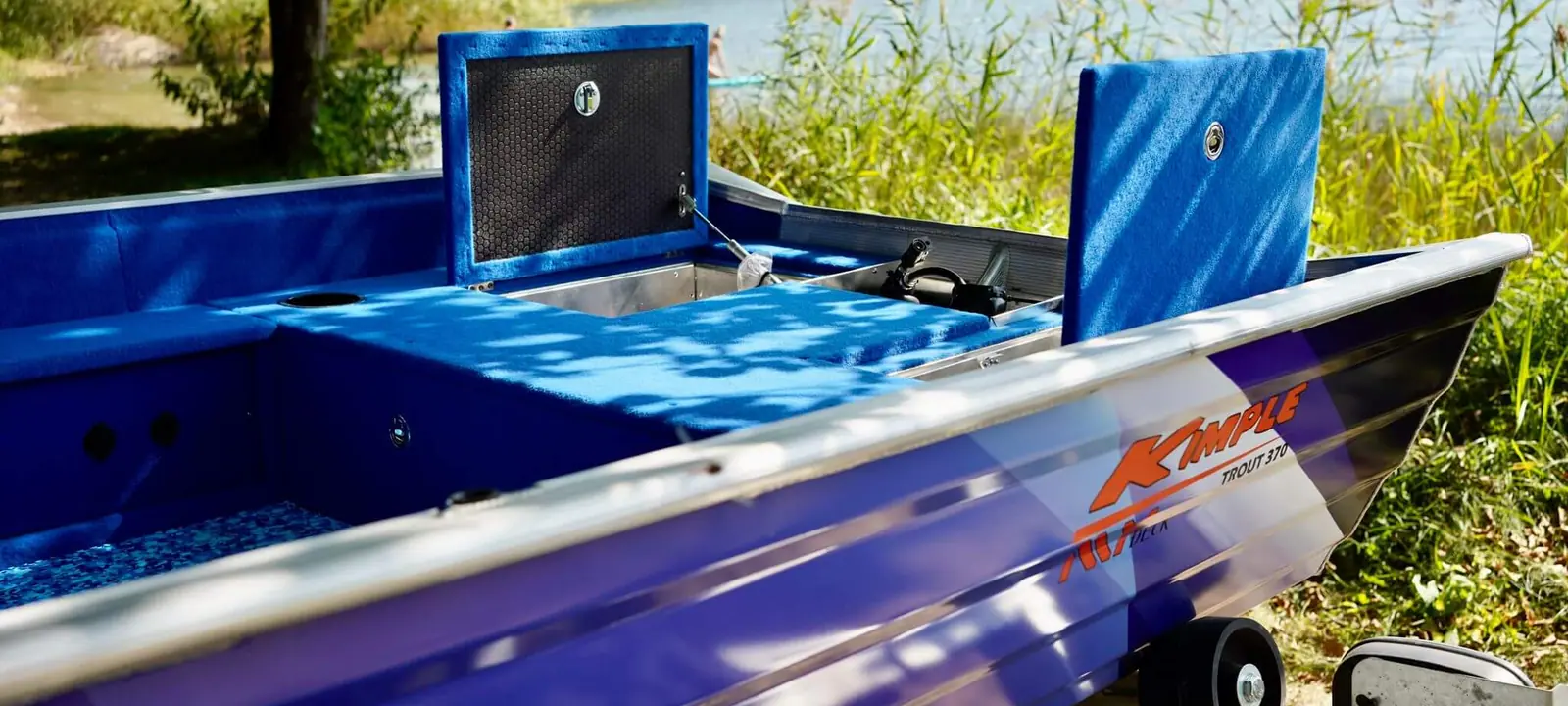
Outdoor winter storage is fine as long as no water or snow collects inside. Best is upside down on blocks, or on the trailer with a sloping cover and the bung out. A Trout 370 or Hunter 350W simply stands on its side in the garage. Leave a big Hunter 460 on the trailer with the bow raised.
Remove the motor and store it upright – an outboard cart solves storage and carrying. Conserve a petrol motor (flush the cooling system, fog the cylinders); charge an electric to 60 % and keep it warm.
Season checklist
| When | Boat | Motor and electrics | Trailer |
|---|---|---|---|
| After every trip | Rinse, pull the bung, dry carpet | Flush cooling (petrol), check connectors | Rinse hubs after salt water |
| Monthly in season | Inspect seams and transom | Check battery charge in the app | Tyre pressure, lights |
| Spring | Bungs, flotation compartments, anodes | Gear oil, plug, fresh fuel; full LiFePO4 charge | Bearings, winch strap, rollers |
| Autumn | Turn over or raise the bow, pull the bung | Conserve petrol motor; LiFePO4 at 50–60 %, keep warm | On stands, grease coupling and lock |
Small repairs you can do
Scratches to bare metal do no harm – the oxide layer reforms in hours. Dents can be tapped out from inside with a rubber mallet against a wooden block. Do not weld cracks yourself – aluminium TIG needs equipment; bring the boat to our workshop. See also outfitting, electric or petrol and the accessories range.
What not to do
- Do not paint the hull with ordinary paint – only aluminium primer and marine paint.
- Do not use acidic wheel cleaners – they strip the protective oxide layer.
- Never let the boat winter with water under the floor – ice bends the deck sheets.
FAQ
Questions and answers
Can an aluminium boat winter outdoors?
Yes, if no water or snow collects: upside down on blocks or on the trailer bow-up with the bung out.
How to store a LiFePO4 battery in winter?
At 50–60 % charge, disconnected, at +5…+25 °C.
When to replace the anode?
When half gone – one season in salt water, 2–3 years in fresh.